Sometime back, someone asked me if I knew what feminism was. I replied, “Honestly, I don’t know. I’ve never really looked it up, but I always hear people talk about women’s rights, so I assume that’s what it’s about.” The person was shocked that I didn’t know much about the topic, and that moment stuck with me. I decided to do some research, and what I discovered truly fascinated me. I became captivated by the stories of the women who pioneered feminism. But as I dug deeper, I also realized that many people, even today, misunderstand what feminism really means. Some believe it’s about women disrespecting men or seeking to dominate them. That couldn’t be further from the truth.
So, dear reader, allow me to take you back in time to uncover the real meaning of feminism and how it all began.
At its core, feminism is the belief in the social, political, and economic equality of the sexes. The movement was never about superiority, it was, and still is, about equal opportunity and the freedom to choose one’s path.
It all began as far back as the 1300s with Christine de Pizan, a happily married woman and mother of three. When her husband passed away, Christine suddenly found herself responsible for her family’s survival in a world that denied women access to financial or business matters. Unable to claim her husband’s earnings or learn about his business, she turned to self-education. Through her writing, she became France’s first female professional writer, advocating for greater equality and respect for women, centuries before the feminist movement officially began.
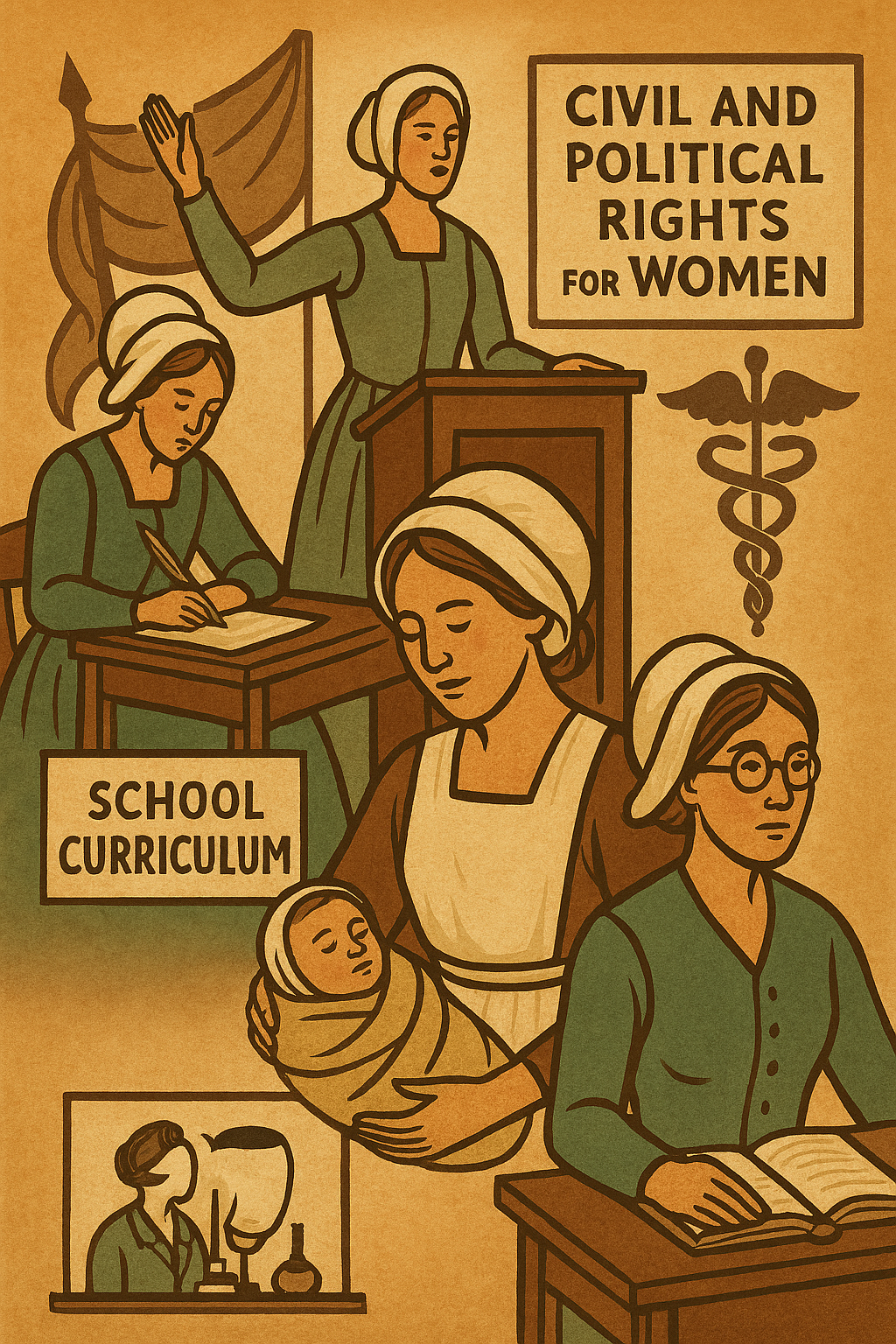
A few centuries later came Mary Astell, often considered one of England’s earliest feminists. Born into a middle-class family, she lost her father at a young age and received no dowry, while her brother’s education was prioritized. With help from her uncle, a Cambridge graduate, she educated herself and began to write about the importance of women’s education. Her works, such as A Serious Proposal to the Ladies, argued that educated women could make wiser life choices and better navigate marriage. She even became the head of a charity school for girls, designing its curriculum to empower them intellectually and morally.
Then there was Mary Wollstonecraft, often regarded as the founder of modern feminism. Raised in a troubled home with an abusive father, Mary fought to protect her mother and later her sisters from violence and unhappy marriages. She decided to build a life of independence, something rare for women of her time. In 1792, she published A Vindication of the Rights of Woman, a groundbreaking work arguing that women should be educated, capable of supporting themselves, and free from marrying out of financial need. She believed women were rational, independent beings whose worth came not from appearance, but from intellect and self-command. Her vision was clear: women should aspire to full citizenship and be equally respected in society.
Another woman whose story deeply inspired me was Elizabeth Cady Stanton (1815–1902), an American writer and activist who led the women’s rights movement in the United States. Unlike many early feminists, Elizabeth came from a privileged background, her father was a lawyer, and her mother supported abolitionist causes. Despite her education, she faced the harsh reminder of society’s gender expectations when her father once lamented, “Oh my daughter, I wish you were a boy.” That moment ignited something in her. Later, she co-organized the Seneca Falls Convention of 1848, the first major gathering for women’s rights, and campaigned tirelessly for women’s suffrage. She believed in what she called “voluntary motherhood,” the idea that women should have the right to control their own bodies and childbearing.
I imagine some of you might be either fascinated by these stories or perhaps a bit overwhelmed. To the curious reader, I encourage you to learn more about these remarkable women and their journeys. To those who might be growing tired of history lessons, I share these stories not to bore you, but to highlight one profound truth that connects them all: the fight for independence, education, and the freedom to define womanhood for oneself.
Later figures like Sojourner Truth, Alice Paul, and Emmeline Pankhurst carried this legacy forward through powerful speeches, civil disobedience, and campaigns that reshaped nations. Their courage paved the way for the progress we see today.
Feminism has evolved through generations, adapting to new challenges, but its vision remains the same, equality, not dominance. In the next part, we’ll explore how this powerful movement became misunderstood and how we can reconnect with its true meaning.
See you soon.
References
-
Stanford Encyclopedia of Philosophy – Feminist History and Thought.
-
World History Encyclopedia – Feminism: Origins and Evolution.
-
National Women’s History Museum – Milestones in the Women’s Rights Movement.
-
Singh, Bachitter. “What is Feminism? Concept, History, and Modern Usages.” PureSociology.
-
Wikipedia – Feminism.